ISSN: 2349-6002
 An UGC-Compliant International Research Journal

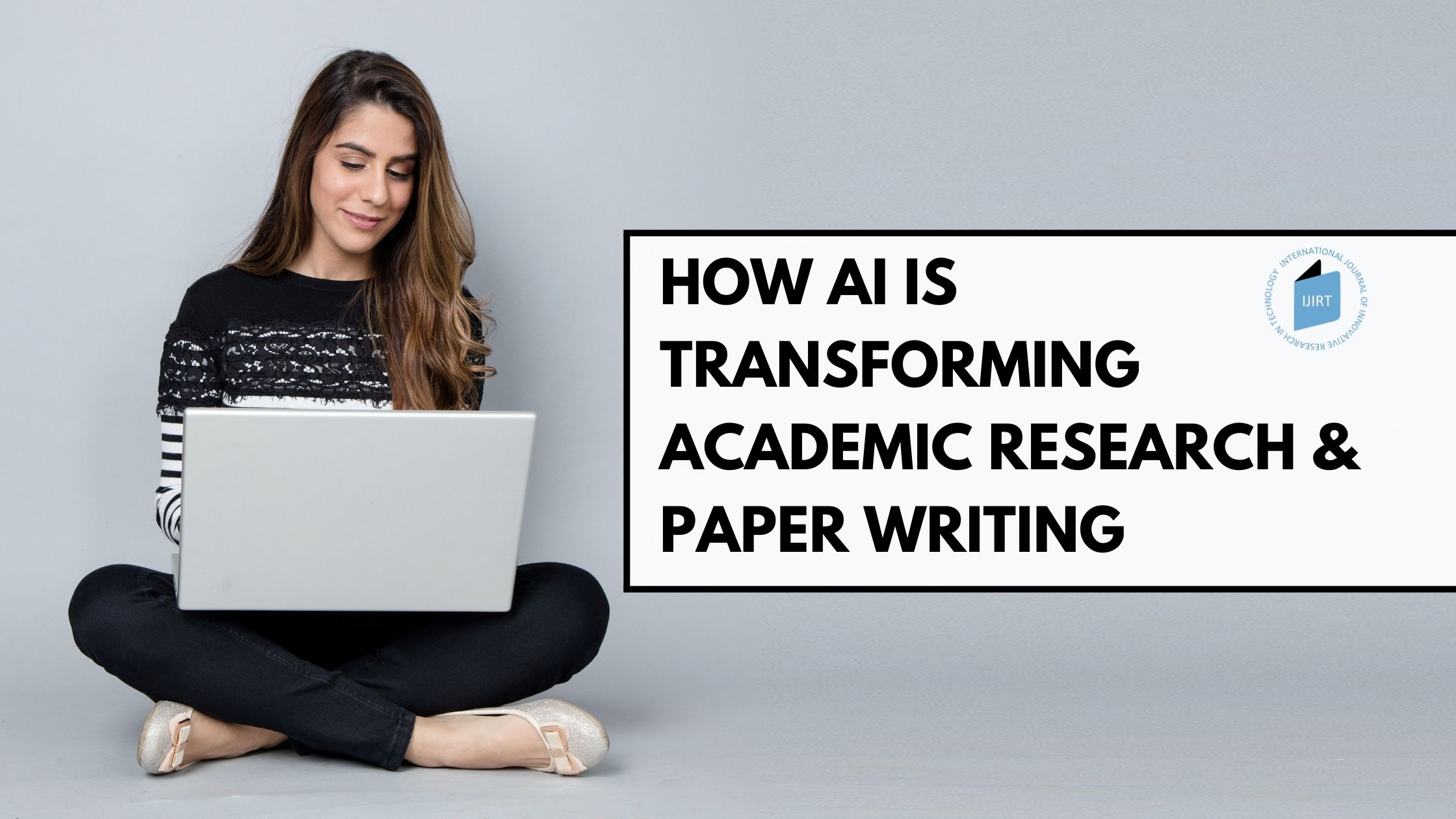
In the last few years, Artificial Intelligence (AI) has quietly become one of the strongest tools in the academic world. From simplifying literature reviews to helping researchers detect plagiarism, AI is changing the way students, scholars, and professionals approach research and paper writing. What used to take weeks can now be done in hours without compromising quality.
For researchers publishing through platforms like IJIRT.org, AI is opening new possibilities to enhance the accuracy, structure, and originality of academic work. But what exactly is AI doing to transform the research process? Let’s take a closer look.
1. Faster & More Accurate Literature Review
One of the most time consuming parts of research is scanning through multiple papers, books, and online resources to understand what has already been done. AI based tools can now scan thousands of documents within seconds, identify themes, highlight keywords, and give researchers a clear direction.
Instead of manually reading every article, researchers can use AI to:
- Identify gaps in existing studies
- Summarize complex research papers
- Find relevant publications for citation
This helps scholars at IJIRT (International Journal of Innovative Research in Technology) save time and focus more on actual analysis rather than searching for information.
2. Improved Writing Quality & Structure
Good research is not just about data; it’s also about clear and strong presentation. AI writing assistants help researchers refine their writing by improving grammar, readability, and structure. These tools can point out weak arguments, unclear sentences, or formatting issues that may otherwise be missed.
While AI cannot replace human thinking, it can act as a smart editor that ensures your paper is polished before submission.
- For IJIRT authors, this means:
- Better academic tone
- More organized writing
- Fewer grammatical errors
- Faster paper preparation
3. Smarter Data Analysis & Interpretation
AI powered tools can analyze complex datasets more efficiently than traditional software. Whether you are working with numerical data, survey responses, machine learning models, or business analytics, AI helps researchers identify patterns that may not be immediately obvious.
For fields like engineering, healthcare, social sciences, finance, and computer science, AI tools can:
- Detect trends
- Run predictive models
- Create data visualizations
- Reduce human errors
This leads to stronger conclusions, improved research accuracy, and more impactful papers.
4. Enhanced Plagiarism Detection & Originality
Academic integrity is extremely important, especially for journals like IJIRT.org, where originality and authenticity are top priorities. AI based plagiarism checkers are now more advanced than ever they don’t just match text but understand sentence structure, synonyms, paraphrased content, and rewritten ideas.
This helps researchers ensure:
- Their work is original
- Citations are properly included
- Accidental plagiarism is avoided
AI tools have become a necessary part of the pre submission process for researchers globally.
5. Better Citation & Reference Management
Managing citations manually can be frustrating. AI powered referencing tools automatically generate accurate citations in various formats (APA, MLA, IEEE, etc.). Researchers no longer have to worry about formatting mistakes.
This is especially helpful for students who are submitting their first research paper to IJIRT, ensuring that their references follow proper academic guidelines.
6. Boosting Productivity & Reducing Stress
With AI automating repetitive tasks like formatting, proofreading, summarizing, data sorting, and citation management researchers can use their time more effectively. Instead of worrying about technical details, they can focus purely on research objectives and innovation.
This increase in productivity reduces stress and allows researchers to meet deadlines more easily, especially when preparing work for publication at IJIRT.
7. Supporting New & Young Researchers
Many first time authors feel nervous about writing and publishing research papers. AI acts like a supportive assistant that helps them understand structure, formatting, methodology writing, and academic tone.
By combining human ideas with AI support, young researchers produce higher quality papers and gain confidence in the publishing process.
Conclusion
AI is not replacing researchers it is empowering them. From speeding up literature reviews to improving writing quality and enhancing originality checks, AI has become an essential part of modern academic research. For authors publishing with IJIRT.org, AI provides additional support to create stronger, more accurate, and more impactful research papers.
When used responsibly, AI helps researchers grow, produce better work, and contribute meaningfully to their fields. The future of academic writing is not AI versus humans it is AI working with humans.